Examples of Intrusive Thoughts: Common Types, Real-Life Examples and Meaning Explained

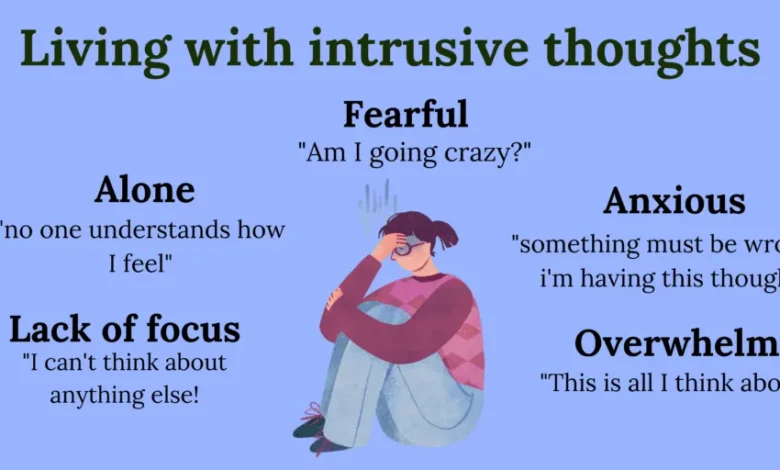
Understanding mental health patterns can feel overwhelming, especially when distressing thoughts appear without warning. Many people search for examples of intrusive thoughts to make sense of sudden mental images or ideas that feel unsettling. These thoughts can be confusing, but they are a normal part of how the brain processes information and do not indicate intent or character flaws.


In everyday life, the mind generates countless automatic thoughts, many of which are irrelevant or random. When some of these thoughts feel disturbing, individuals may become anxious or overfocused on them. Exploring examples of intrusive thoughts helps reduce fear and supports a clearer understanding that these experiences are common and not dangerous in themselves.
What are examples of intrusive thoughts?
When people ask what are examples of intrusive thoughts, they are usually trying to understand why their mind produces unwanted and sometimes alarming ideas. These thoughts can include sudden fears, disturbing mental images, or unwanted “what if” scenarios that appear without control. They are not planned and often conflict with a person’s values or beliefs.
To better understand examples of intrusive thoughts, it helps to recognise that they are not meaningful predictions or hidden desires. Instead, they are random mental events that become noticeable because they feel emotionally intense. The distress comes from interpretation rather than the thoughts themselves, especially when individuals try to suppress or analyse them repeatedly.
Common examples of intrusive thoughts
Common examples of intrusive thoughts often fall into categories related to safety, morality, and social behaviour. Some individuals experience sudden images of harm, such as accidentally hurting themselves or others, even though they have no intention of doing so. These thoughts can be alarming but are widely experienced across the population.
Other examples of intrusive thoughts include fears of contamination, embarrassment, or making serious mistakes. A person might repeatedly worry about leaving appliances on or behaving inappropriately in public. These mental experiences feel vivid, yet they are not reflective of real intention. They are simply the brain’s way of processing uncertainty and fear.
Examples of intrusive thoughts in OCD
In obsessive-compulsive disorder, examples of intrusive thoughts become more persistent and distressing. These thoughts often repeat and feel difficult to ignore, leading individuals to develop compulsive behaviours in an attempt to reduce anxiety. The thoughts themselves are not unusual, but the response cycle is more intense.
People experiencing OCD may constantly question safety, morality, or relationships. For example, they may repeatedly check whether harm could occur or seek reassurance from others. Understanding examples of intrusive thoughts in OCD is important because it highlights that the problem lies in the reaction cycle, not the presence of thoughts themselves.
Examples of intrusive thoughts and anxiety
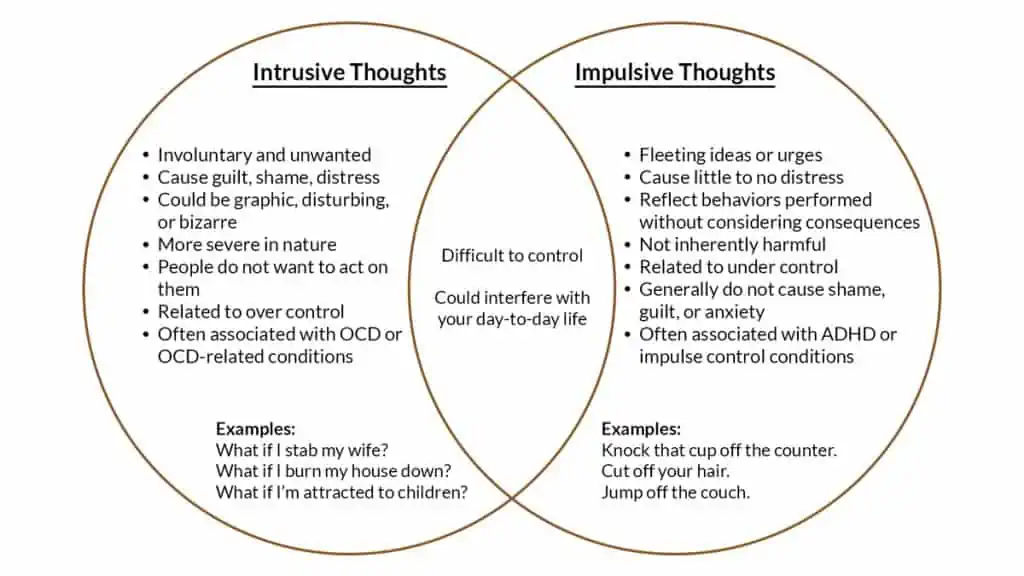
Anxiety can significantly intensify unwanted mental activity, making examples of intrusive thoughts more frequent and noticeable. When a person is stressed, the brain becomes hyper-alert to potential threats, which can trigger a stream of “what if” scenarios that feel difficult to control or dismiss.
These thoughts may involve fears of failure, danger, or loss of control in everyday situations. For example, someone might constantly imagine worst-case outcomes even in safe environments. Learning about examples of intrusive thoughts helps individuals understand that anxiety amplifies these experiences rather than creating real danger.
Examples of intrusive thoughts in postpartum individuals
Postpartum individuals may experience particularly distressing examples of intrusive thoughts due to hormonal changes, emotional adjustment, and fatigue. These thoughts can involve unwanted fears about accidentally harming a baby or not being a good parent, even when there is no intention or risk involved.
Such experiences can feel deeply upsetting because they conflict with strong protective instincts. However, examples of intrusive thoughts in postpartum stages are more common than many realise. Recognising them as temporary and anxiety-driven mental events can reduce guilt and help individuals feel more supported during this sensitive period.
What do intrusive thoughts mean?
Many people misinterpret intrusive thoughts as signals of hidden meaning, but in reality, they do not represent true intentions. Instead, examples of intrusive thoughts reflect how the brain generates random mental activity, especially during stress or emotional sensitivity. They are not predictions or subconscious desires.
The meaning we attach to these thoughts is what creates distress. When individuals interpret them as important or threatening, anxiety increases. Understanding examples of intrusive thoughts helps separate thought from identity, allowing people to see them as temporary mental noise rather than reflections of character or intention.
How to respond to intrusive thoughts
Responding effectively to intrusive thoughts involves reducing emotional reaction and avoiding excessive analysis. When individuals try to suppress or argue with thoughts, they often become more persistent. A more helpful approach is to acknowledge their presence without engaging in fear-based interpretation or compulsive behaviour.
Techniques such as mindfulness, grounding exercises, and cognitive behavioural strategies can help reduce distress. Recognising examples of intrusive thoughts as harmless mental events allows individuals to shift focus away from fear and regain a sense of control over their attention and emotional response.
Conclusion
Intrusive thoughts are a common human experience and are not indicators of intention or personal identity. Exploring examples of intrusive thoughts helps clarify that these mental events are often random, temporary, and influenced by stress, anxiety, or emotional sensitivity rather than real desire or meaning.
By understanding how these thoughts work, individuals can respond with greater awareness and less fear. Whether they occur in anxiety, OCD, or postpartum experiences, recognising examples of intrusive thoughts allows people to reduce distress and focus on healthier patterns of thinking and emotional balance.